TL;DR:
- Focusing on the quality of LinkedIn connections and clear qualification criteria improves the chances of securing qualified meetings.
- Effective targeting, personalized messaging, strategic follow-ups, and continuous data analysis are essential for long-term outreach success.
Getting lots of LinkedIn connections feels productive. It rarely is. The real measure of a successful outreach program is how many of those connections turn into qualified meetings with prospects who actually fit your ideal client profile, have budget, and are ready for a real conversation. Most professional services firms struggle here, not because their outreach volume is low, but because their targeting, messaging, and follow-up aren’t built to attract the right people. This guide gives you a concrete, research-backed framework for improving both the quantity and quality of meetings you set through LinkedIn.
Table of Contents
- Define what a qualified meeting looks like for your business
- Target the right ICP using LinkedIn search and signals
- Personalize your outreach message to boost acceptance and engagement
- Leverage follow-up sequences and smart segmentation to secure more qualified meetings
- Measure, analyze, and iterate on your outreach for continual improvement
- Our perspective: the volume trap most firms never escape
- Ready to build a LinkedIn outreach engine that delivers qualified meetings?
- Frequently asked questions
Key Takeaways
| Point | Details |
|---|---|
| Clarify qualification criteria | Know exactly what makes a meeting valuable for your business so every outreach effort is aligned. |
| Target high-signal prospects | Focus on active prospects and your true ICP to boost acceptance and meeting rates. |
| Personalize every message | Custom, relevant outreach consistently leads to more replies and quality conversations. |
| Leverage automation and follow-ups | Smart sequencing and segmentation turn replies into committed, qualified meetings. |
| Track, benchmark, and optimize | Measure your campaign results and compare to benchmarks to keep improving your outcomes. |
Define what a qualified meeting looks like for your business
Before you send a single connection request, you need to know exactly what you’re aiming for. This sounds obvious, but most firms skip this step and end up booking meetings that waste everyone’s time.
A qualified meeting isn’t just any conversation with someone who accepts your request. It’s a scheduled call or meeting with a prospect who meets specific criteria that signal genuine potential to become a client. Without this definition, your outreach team will optimize for meeting volume rather than meeting quality, and that’s a fast path to a bloated calendar with very little pipeline to show for it.
The classic framework for this is BANT: Budget, Authority, Need, and Timeline. A truly qualified meeting involves someone who has discretionary budget for the type of service you offer, holds decision-making authority (or is directly involved in the decision), has a business challenge your firm solves, and is actively thinking about addressing it within a reasonable window. You don’t need to confirm all four criteria before the first meeting, but your outreach should screen for at least two or three before a meeting is set.
Here’s a practical qualification checklist to document and enforce across your team:
- Role: Does their title indicate decision-making authority? (VP, Director, C-Suite, Founder)
- Company size: Does the firmographic match your sweet spot?
- Industry: Is their sector one you actively serve and have credible results in?
- Stated pain or intent: Have they posted about, commented on, or engaged with content related to your area of expertise?
- Budget indicator: Does the company’s size and stage suggest they can afford your engagement?
- Timeline: Are there signals of urgency, such as a recent hiring push, funding round, or restructuring?
Documenting this checklist and giving your team a scoring system (even a simple 1-3 rating per criterion) creates accountability and helps you quickly identify which prospects are worth prioritizing. It also makes it easier to target ideal clients systematically rather than relying on gut feel.
Pro Tip: Build your qualification criteria directly into your opening outreach message. If you mention a specific challenge or use industry language that only resonates with your actual ICP, unqualified prospects will self-select out before you invest time in them.
Target the right ICP using LinkedIn search and signals
With your qualification definitions locked in, the next priority is finding and focusing on the right people for outreach. LinkedIn gives you more targeting precision than almost any other platform for B2B prospecting, but most firms use only a fraction of what’s available.
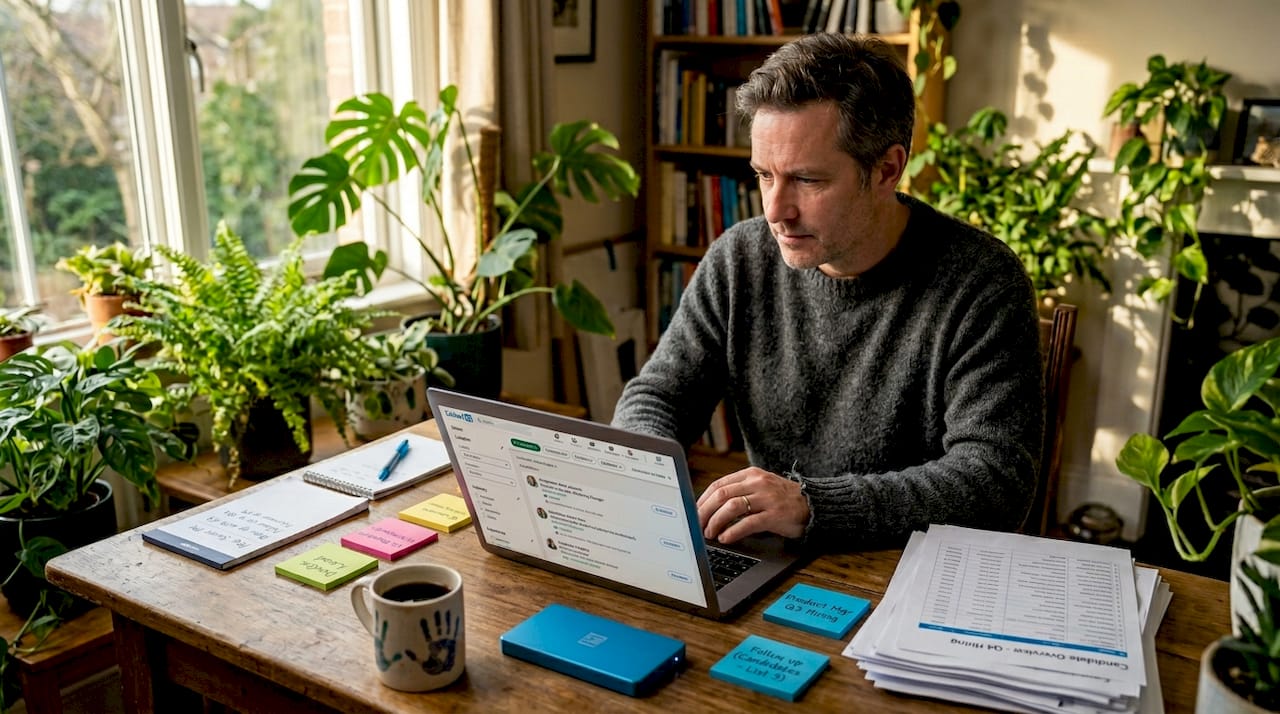
Start with LinkedIn’s native search filters: industry, job title, seniority level, company headcount, geography, and years in role. Layer in Boolean search strings to get surgical. For example, if you target HR leaders at mid-market professional services firms, a search like “(VP OR Director OR Head) AND (Human Resources OR People Operations)” combined with a company size filter of 51 to 500 employees will get you far closer to your ICP than a broad keyword search.
Beyond filters, engagement signals matter enormously. Average connection-request approval rate sits at 29.61% across LinkedIn outreach campaigns, but that average masks a wide range. Prospects who are actively posting, commenting, or engaging with content on LinkedIn are far more likely to accept your request and respond to your message. In fact, targeting active and high-signal prospects materially improves both acceptance rates and the quality of early conversations.
Here are the quick ICP signals to look for before sending a connection request:
- Recent posts: Did they publish or share content within the last 30 days?
- Post engagement: Are they commenting on others’ posts, especially in your topic area?
- Group activity: Are they active in LinkedIn groups relevant to your niche?
- Profile completeness: A fully filled-out profile signals they take LinkedIn seriously.
- Role tenure: 1-3 years in a role often indicates someone actively building and buying, not just maintaining.
- Company growth signals: Recent job postings in adjacent departments can mean new budget or initiatives.
Avoiding common outreach mistakes at this stage is critical because sending requests to inactive accounts or low-fit prospects doesn’t just waste time — it also damages your profile’s engagement metrics, which can limit your visibility over time. Pair strong ICP filters with smart segmentation strategies to build focused, manageable prospect lists you can actually work through thoughtfully.
Pro Tip: Before sending a connection request, look at the prospect’s recent activity. If they posted or commented in the last two weeks, reference it. Something as simple as “I noticed your recent comment on [topic]” immediately signals you’re a real person, not a bot.
Personalize your outreach message to boost acceptance and engagement
Once you have your target list, your first impression — your message — makes all the difference. Generic templates get ignored. Personalized messages get replies.
The data backs this up clearly. LinkedIn messenger campaign reply rates can reach up to 16.86% when campaigns are properly personalized and targeted. Compare that to average cold email reply rates, which typically hover around 1-5%, and the case for investing in message quality becomes undeniable.
What makes a LinkedIn intro message work? Three things: relevance, brevity, and a clear but low-pressure intent.
Relevance means you’re referencing something specific to that person. A recent post they wrote, a shared group, a mutual connection, a challenge common to their role in their specific industry. Brevity means your opening message should be under 150 words. No pitching your full service offering in the first touch. Intent means making clear why you’re reaching out without immediately asking for something big. A meeting request in the first message almost always kills the conversation before it starts.
Here are some effective opening lines and icebreakers to model:
- “I saw your post on [specific topic] and it actually touched on something a lot of [industry] leaders I work with have been wrestling with.”
- “We have a mutual connection in [Name], and they mentioned you’re building out [initiative].”
- “I’ve been following [Company]’s growth over the past year — impressive trajectory. I work with similar firms on [relevant challenge].”
- “Your profile caught my attention because you’re doing work in [niche] that aligns closely with a challenge we help [role] leaders solve.”
- “Congrats on [recent promotion or company milestone] — what an exciting stage to be in.”
Your goal in the first message is to earn a reply, not close a deal. Once the conversation starts, you have the opportunity to qualify further and guide the prospect toward a meeting. Learning to write high-impact outreach messages is a skill, and it’s worth testing different openers across different ICP segments to see what resonates. You can also draw inspiration from strong outreach campaign ideas that go beyond the standard cold message.
Pro Tip: Congratulating someone on a visible achievement — a promotion, a speaking engagement, a published article — is one of the most powerful ways to open a LinkedIn conversation. It shows genuine attention and creates a natural reason for contact.
Leverage follow-up sequences and smart segmentation to secure more qualified meetings
Getting a response is only half the battle. Turning a reply into a real meeting requires the right follow-up and segmentation. Most meetings are not set from the first message. They’re set after multiple touches, handled consistently and with the right spacing.
Here’s a simple multi-step follow-up sequence that converts without feeling pushy:
- Day 1: Send your personalized connection request with a short, no-ask intro note.
- Day 3-4: After acceptance, send your first message introducing context and a light value offer (an article, a relevant insight, a question).
- Day 8-10: Follow up if no reply. Reference your prior message briefly and add a new piece of value or a different angle.
- Day 15-18: Final follow-up. Keep it short, reference your previous attempts, and close with a low-friction ask (“Would it make sense to connect for 20 minutes?”).
- Day 30+: If still no reply, move them to a nurture list and re-engage with content interactions before attempting direct outreach again.
Segmentation is the other side of this equation. Segmentation and timing drive higher show rates for meetings booked through LinkedIn. Sending the same follow-up message to every prospect regardless of where they are in the funnel is one of the most common conversion killers.
| Approach | Connection rate | Reply rate | Meeting conversion |
|---|---|---|---|
| One-size-fits-all follow-up | Lower | 3-5% | 1-2% |
| Segmented and sequenced follow-up | Higher | 10-16% | 5-9% |
Segmenting by intent (warm responders vs. cold non-responders), job role, or prior engagement allows you to tailor each follow-up touch to where that person actually is. Someone who replied but went quiet needs a different message than someone who never opened your first note. Review your outreach tips regularly and consider investing in customized outreach campaigns that account for these distinctions at scale.
Measure, analyze, and iterate on your outreach for continual improvement
To ensure your tactics are working, actively track your results and iterate for even stronger performance. Without data, you’re just guessing at what’s working. With it, you can make small adjustments that produce compounding improvements over time.
Here are the core metrics to track across every LinkedIn outreach campaign:
- Connection request send volume
- Connection approval rate
- First message reply rate
- Meeting booked rate (replies that convert to scheduled calls)
- Meeting show rate (booked calls that actually happen)
- Meeting quality score (your team’s post-meeting qualification rating)
Benchmark those metrics against published data so you have an external reference point. Current LinkedIn campaign benchmarks show a 29.61% connection approval rate and up to 16.86% reply rate for well-run messenger campaigns. If your approval rate is below 20% or your reply rate is under 8%, something is off in your targeting or messaging and needs to be addressed immediately.
| Metric | Your campaign | Industry benchmark |
|---|---|---|
| Connection approval rate | Track weekly | 29.61% |
| First message reply rate | Track weekly | Up to 16.86% |
| Meeting booked rate | Track per sequence | 5-9% (segmented) |
| Meeting show rate | Track per month | 70-85% |
To build a data-driven improvement loop, consider using these practices and tools:
- A/B test message variations: Change one variable at a time (opener, length, call to action) and track which version performs better over a 2-week window.
- Use a CRM or outreach tracker: Log every touch, every reply, and every outcome. Even a spreadsheet works at early stages.
- Review weekly: Set aside time each week to review your numbers and identify patterns in what’s working.
- Gather qualitative feedback: After meetings, ask your sales team which prospects felt most qualified. That feedback should inform your ICP and messaging adjustments.
- Track prospect engagement tools: Platforms like prospect engagement tools can add behavioral data to your targeting decisions.
Connecting analytics to action is what separates campaigns that plateau from those that improve month over month. Use your data regularly and apply those learnings to optimize outreach campaigns for both lead quality and return on investment.
Our perspective: the volume trap most firms never escape
Here’s something most LinkedIn outreach guides won’t tell you: the obsession with volume is the single biggest reason professional services firms fail to generate quality meetings consistently. There’s a pervasive belief that more connections equal more pipeline. It doesn’t. More relevant connections equal more pipeline.
We’ve seen firms send thousands of connection requests per month and book fewer qualified meetings than firms sending a few hundred to precisely targeted, high-signal prospects. The difference isn’t volume. It’s clarity of ICP, quality of personalization, and discipline in follow-up segmentation.
The uncomfortable truth is that a 5% meeting rate from 200 highly targeted prospects is a far better outcome than a 1% meeting rate from 2,000 loosely targeted ones. The math might look similar on the surface, but the quality of those 10 meetings from targeted outreach is dramatically higher. Faster close rates. Bigger deal sizes. Less churn.
The firms that figure this out stop chasing connection numbers and start obsessing over meeting quality scores. They build feedback loops between their sales team and their outreach strategy. They treat LinkedIn as a precision tool, not a broadcasting channel.
If your outreach feels like it’s spinning without producing real pipeline, the solution is almost never to send more messages. It’s to send better ones to better-qualified people.
Ready to build a LinkedIn outreach engine that delivers qualified meetings?
If this framework resonates but you don’t have the internal bandwidth to execute it well, you’re not alone. Building a consistent, personalized, data-driven LinkedIn outreach program takes expertise, time, and the right systems.
At TheLeadLab, we run done-for-you LinkedIn outreach campaigns specifically for professional services firms that want a predictable flow of qualified meetings without adding headcount. From ICP targeting and message copywriting to response management and campaign analytics, we handle the full outreach cycle on your behalf. Our clients see measurable improvements in meeting quality and pipeline contribution, typically within the first 60 days. If you want to see what a campaign built for your firm would look like, book a consultation and we’ll walk you through it.
Frequently asked questions
What is the average LinkedIn connection request approval rate in 2026?
The average approval rate for LinkedIn connection requests is 29.61% according to recent benchmarks, though well-targeted campaigns to active prospects can exceed this.
How many follow-ups should you send to increase qualified meetings?
Best practice is to send 2-4 personalized follow-ups after your initial message, spaced out over 3 to 4 weeks, to maximize replies and meeting conversions without burning the relationship.
How do you define a qualified meeting in B2B LinkedIn outreach?
A qualified meeting typically involves a prospect with decision-making authority, relevant budget, a confirmed business need, and intent that aligns with your specific services and current capacity.
What is a good reply rate for LinkedIn messenger outreach in 2026?
A reply rate up to 16.86% is considered strong for LinkedIn messenger campaigns targeting B2B prospects with personalized, well-sequenced outreach.
Does LinkedIn prospect activity really affect response and meeting rates?
Yes, significantly. Targeting prospects with recent LinkedIn activity improves both acceptance rates and early conversation quality because active users are more engaged and receptive to relevant outreach.