
TL;DR:
- Effective LinkedIn outreach is a personalized, relationship-driven process, not mass messaging or spam.
- Successful campaigns focus on targeted research, strategic messaging, and thoughtful follow-ups.
- Balancing automation with manual, personalized engagement yields the best results for professional services firms.
Most marketing leaders at professional services firms treat LinkedIn like a digital business card holder. They post occasionally, accept connections, and wait. That passive approach leaves serious revenue on the table. LinkedIn outreach flips the script entirely. It’s a proactive, structured process of identifying your ideal prospects, initiating contact, and building relationships that convert into qualified meetings and real business. This guide breaks down exactly what LinkedIn outreach means, how the process works, which strategies deliver results for B2B firms, and what mistakes to avoid before you invest another hour in the platform.
Table of Contents
- Defining LinkedIn outreach: Beyond connection requests
- How LinkedIn outreach works: Process, people, and tools
- Effective LinkedIn outreach strategies for B2B lead generation
- Common pitfalls and how to avoid them
- Rethinking LinkedIn outreach: What most leaders get wrong
- Partner with experts for smarter LinkedIn outreach
- Frequently asked questions
Key Takeaways
| Point | Details |
|---|---|
| Outreach is proactive | LinkedIn outreach means actively making targeted connections for B2B growth, not passive networking. |
| Personalization wins | Tailored, thoughtful messages outperform generic scripts and lead to stronger business relationships. |
| Process matters | A clear, consistent outreach workflow and the right roles or tools support scalable success. |
| Avoid common pitfalls | Avoid generic mass messaging and respect LinkedIn’s rules to protect your reputation and results. |
| Focus on conversations | Success comes from real engagement and trust-building, not just connection volume. |
Defining LinkedIn outreach: Beyond connection requests
LinkedIn outreach gets misunderstood constantly. Many decision-makers assume it means blasting connection requests with a copy-paste pitch, or running a bot that floods inboxes with generic messages. That’s not outreach. That’s noise.
True LinkedIn outreach is a deliberate, relationship-first process. It uses LinkedIn’s networking infrastructure to identify the right people, open conversations with genuine value, and guide prospects through a trust-building journey. As we’ve outlined in our outreach campaign ideas, targeted relationship-building is what separates effective outreach from spam.
Here’s what LinkedIn outreach actually includes:
- Personalized connection requests with a short, relevant note that shows you’ve done your homework
- Value-first messaging sequences that offer insight, a resource, or a relevant observation before asking for anything
- Multi-touch follow-up spread across days or weeks, not hours
- Targeted prospect research using filters like job title, industry, company size, and geography
- Content engagement such as commenting on a prospect’s posts before reaching out directly
A common myth is that volume always wins. It doesn’t. The firms that generate leads on LinkedIn consistently are the ones treating every message as a one-to-one conversation, not a broadcast.
“The difference between outreach that converts and outreach that annoys comes down to one word: relevance. If your message could have been sent to anyone, it will resonate with no one.”
For professional services firms specifically, outreach serves a dual purpose. It generates leads, yes. But it also builds the kind of professional credibility that shortens sales cycles. When a prospect has seen your name, read your insights, and received a thoughtful message, the first call feels like a continuation, not a cold start.
How LinkedIn outreach works: Process, people, and tools
Effective outreach follows a clear workflow. Skipping steps is where most campaigns fall apart. Here’s the sequence that works:
- Research your target audience using LinkedIn Sales Navigator or manual filters to build a list of qualified prospects
- Send a personalized connection request with a short note referencing something specific about their role or company
- Engage before pitching by liking or commenting on their recent content after connecting
- Send your first message focused on value, not your services
- Follow up strategically with two to three additional touchpoints spaced several days apart
- Qualify the conversation by asking questions that reveal fit and intent before booking a call
This isn’t a one-person job at scale. Here’s how responsibilities typically break down:
| Role | Responsibility | Key touchpoints |
|---|---|---|
| Marketing | Messaging strategy, content assets, ICP definition | Campaign setup, sequence copy |
| Sales/BD | Prospect qualification, call conversion | Follow-up messages, discovery calls |
| Operations | Tool setup, CRM integration, reporting | Automation oversight, data hygiene |
On the tools side, LinkedIn Sales Navigator is the gold standard for prospecting. Pair it with a CRM like HubSpot or Salesforce to track conversations, and you have a solid foundation. Some teams layer in automation tools for connection requests or follow-ups, which can work, but only when customized outreach campaigns maintain real personalization at each touchpoint. Personalization in outreach can increase response rates by up to 30%, which means cutting corners on message quality to save time is a losing trade.
For a broader look at structuring your approach, the team at HubSpot has published a useful breakdown of LinkedIn outreach strategies worth reviewing alongside your internal process.
Pro Tip: Build your follow-up sequence before you send the first message. Knowing your next two or three touchpoints in advance keeps momentum going and prevents prospects from falling through the cracks after the initial connection.
Effective LinkedIn outreach strategies for B2B lead generation
Knowing the process is one thing. Knowing which strategies actually move the needle for professional services firms is another.
The most effective frameworks we see working right now:
- Connection plus value message: Connect with a relevant note, then follow up with a short insight, article, or observation tied to their specific business challenge
- Content-first approach: Engage with a prospect’s posts for one to two weeks before reaching out directly. When your message arrives, you’re already familiar
- Event or trigger-based outreach: Reference a recent funding round, job change, or industry event in your opening message to make it feel timely and relevant
- Referral bridge: Mention a mutual connection or shared group to establish instant credibility
One of the biggest decisions firms face is how much to automate. Here’s an honest comparison:
| Factor | Automated outreach | Manual outreach |
|---|---|---|
| Time investment | Low | High |
| Lead quality | Medium | High |
| Personalization | Limited | Strong |
| Risk of restrictions | Higher | Lower |
| Best for | Top-of-funnel volume | High-value prospects |
The smartest approach blends both. Use automation for initial connection requests at scale, then switch to manual, personalized messages for follow-up sequences with engaged prospects. Our LinkedIn outreach tips go deeper on how to balance this effectively.
Tailored messaging consistently improves conversion rates for B2B sales in professional services, which is why strategic messaging deserves as much attention as your targeting criteria. Also, review what generating B2B leads looks like at different funnel stages so your messaging matches where each prospect actually is.

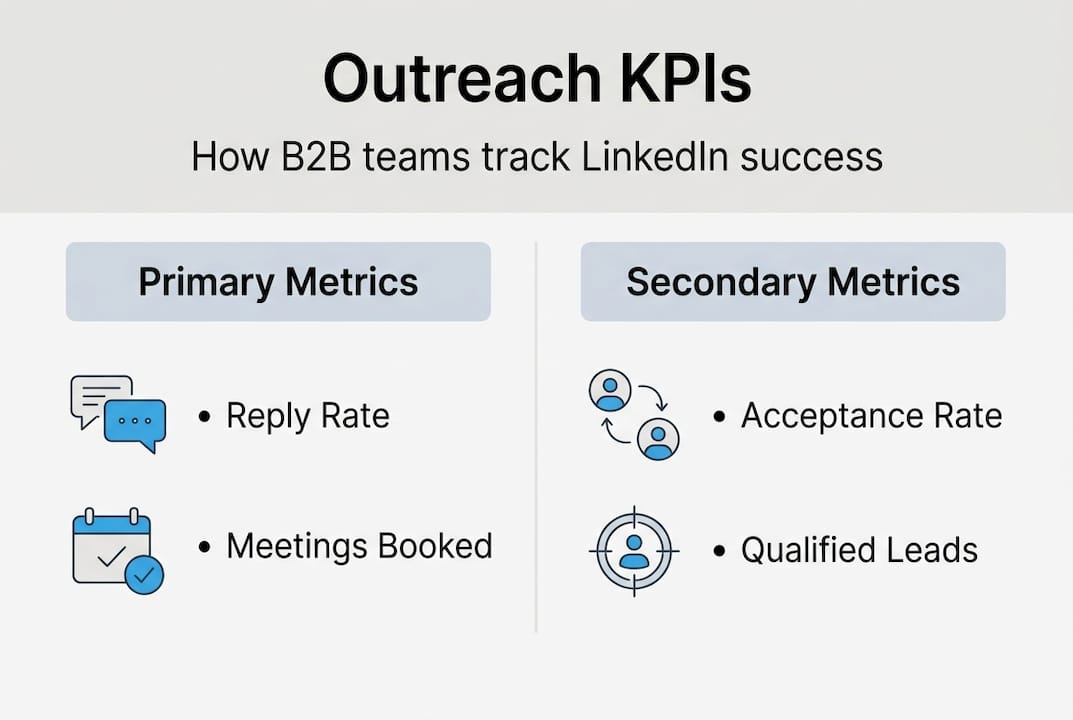
For KPIs, track reply rate, meetings booked, and qualified leads generated. Connection acceptance rate is a secondary metric. It tells you about your targeting, not your results. Sales Hacker’s guide to LinkedIn messaging strategies offers additional frameworks for measuring what matters.
Pro Tip: Set a benchmark reply rate of 15 to 25% for cold outreach. If you’re below that consistently, the problem is usually your opening message, not your targeting.
Common pitfalls and how to avoid them
Even well-resourced firms make avoidable mistakes with LinkedIn outreach. Knowing what to watch for saves time, budget, and your professional reputation.
The most common errors:
- Generic opening messages that could have been sent to anyone, referencing nothing specific about the recipient
- Pitching too early before any rapport or trust has been established
- Over-relying on automation to handle follow-ups without any human review or personalization
- Sending too many requests too quickly, which triggers LinkedIn’s spam filters and can result in account restrictions
- Weak or nonexistent follow-up after the initial connection, leaving warm prospects cold
- No clear call to action, leaving prospects unsure what you actually want from the conversation
The automation issue deserves extra attention. Over-automation and lack of personalization can harm brand reputation and reduce response rates significantly. This is one of the core reasons firms exploring the outreach agencies pros and cons conversation often find that a managed, expert-led approach outperforms a fully automated DIY setup.
“Sending 500 generic messages a week doesn’t make you a power user. It makes you a liability. One well-crafted message to the right person is worth more than a hundred copy-paste blasts.”
LinkedIn’s algorithm and trust and safety team are increasingly sophisticated. Accounts that send high volumes of identical messages, connect indiscriminately, or use unauthorized third-party bots face temporary restrictions or permanent bans. The platform rewards genuine engagement.
A solid personalized messaging guide will help you build templates that feel human even at scale. And reviewing LinkedIn’s own guidance on LinkedIn lead generation mistakes is a smart checkpoint before launching any new campaign.
Quick checks to keep your outreach professional: review every message before it sends, limit connection requests to 20 to 30 per day, and audit your sequences quarterly for relevance and tone.
Rethinking LinkedIn outreach: What most leaders get wrong
Here’s the uncomfortable truth most articles won’t tell you. The majority of B2B firms measure LinkedIn outreach success by the wrong things. They celebrate a 40% connection acceptance rate or a busy inbox without asking whether any of those conversations are actually going anywhere meaningful.
The firms that win long-term aren’t the ones with the highest volume. They’re the ones building targeted prospecting insight into every campaign, treating each conversation as a potential relationship rather than a transaction. Successful outreach isn’t about the highest number of connections. It’s about building relevant conversations that lead to trust.
For professional services firms, this is especially true. Your buyers are sophisticated. They can smell a template. When you show up with genuine curiosity about their business, reference something real, and offer something useful before asking for a meeting, you become a resource instead of a vendor. That shift changes everything about how your pipeline develops and how quickly deals close.
Prioritize intent over activity. A team that books eight qualified calls a month from 200 outreach messages is outperforming a team booking six calls from 2,000 messages, every time.
Partner with experts for smarter LinkedIn outreach
If your team is spending hours on outreach that isn’t converting, the problem usually isn’t effort. It’s strategy, targeting, or message quality.
The Lead Lab specializes in done-for-you LinkedIn outreach built specifically for professional services firms. From prospect targeting and message copywriting to response management and campaign analytics, we handle the full process so your team can focus on closing. Browse our client results to see how firms like yours have scaled qualified meetings, and join our live webinars for ongoing education on what’s working in B2B outreach right now. Our campaigns integrate seamlessly with your existing sales and marketing workflows, so there’s no disruption, just results.
Frequently asked questions
What exactly does LinkedIn outreach involve?
LinkedIn outreach is the process of proactively identifying, contacting, and building relationships with your ideal prospects through personalized messaging and follow-up on the LinkedIn platform. It’s a strategic, multi-touch process that uses LinkedIn’s networking tools with clear intent, not random connection requests.
Why is personalization important for LinkedIn outreach?
Personalized messages make prospects far more likely to respond, while generic outreach lowers reply rates and can damage your brand’s credibility. Personalization can boost response rates by up to 30%, making it one of the highest-leverage improvements you can make to any campaign.
How can I measure success in LinkedIn outreach campaigns?
Track response rate, meetings booked, and qualified leads generated rather than just connection requests sent. Measuring KPIs like reply rates and booked meetings ensures your outreach is driving real lead generation, not just activity.
Is automation bad for LinkedIn outreach?
Overusing automation reduces authenticity and risks account restrictions from LinkedIn. Over-automation and weak personalization can damage brand reputation and reduce effectiveness, so quality human judgment should always guide your sequences.
3 responses