
TL;DR:
- Effective sales emails require proper infrastructure and targeted, concise messaging. Personalization and automation improve engagement and drive revenue, while clean lists and authentication ensure deliverability.
A sales email is a targeted, permission-based message sent to prospects or customers to generate leads, nurture relationships, or close deals. Cold outreach has never been harder: prospects open only 9% of cold sales emails, which means the average message dies in an inbox without a second glance. That number makes one thing clear. The teams winning in 2026 are not sending more email. They are sending better email, built on sharper segmentation, tighter copy, and infrastructure that treats every message as part of a measurable system. This guide gives you the framework to do exactly that.
What makes a sales email campaign actually work?
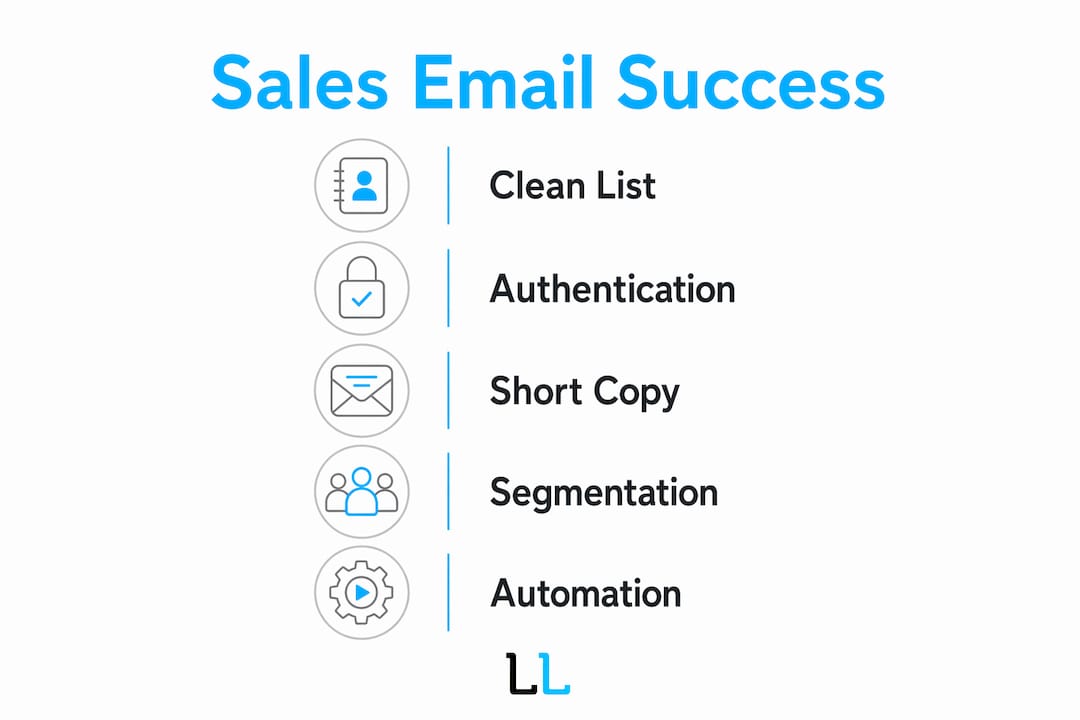
The foundation of effective sales outreach is not a clever subject line. It is the infrastructure behind the message. Three technical protocols sit at the base of every inbox-reaching campaign: SPF (Sender Policy Framework), DKIM (DomainKeys Identified Mail), and DMARC (Domain-based Message Authentication, Reporting, and Conformance). Without all three configured correctly, your emails land in spam before a human ever sees them.

List quality matters just as much as authentication. Targeting small, high-intent segments produces three to five times more value per subscriber than chasing raw volume. That means a list of 500 verified, well-matched contacts will outperform a list of 5,000 scraped addresses every time. Cleaning your list quarterly, removing bounced addresses, and suppressing unengaged contacts protects your sender reputation and keeps deliverability high.
Segmentation is the next layer. The most useful segments for professional services teams include job title and seniority, industry vertical, company size, and prior engagement history. Effective segmentation starts simple and scales by engagement tier, which consistently lifts open and conversion rates. Start with two or three segments and refine from there.
Pro Tip: Before launching any campaign, run your domain through a mail tester tool to confirm SPF, DKIM, and DMARC are all passing. A failed authentication check is the single fastest way to destroy deliverability.
Automation is the multiplier that makes segmentation pay off at scale. Automated lifecycle flows generate roughly 41% of total email revenue while accounting for only 5.3% of emails sent. That ratio shows the power of sending the right message at the right moment, rather than blasting a full list on a fixed schedule. The real benefits of sales automation go beyond efficiency. They include consistent follow-up, reduced human error, and the ability to run personalized sequences at a scale no manual process can match.
How do you write a sales email that gets a response?
The subject line is the gatekeeper. Subject lines under 50 characters perform best, and personalization within that limit lifts open rates further. A subject line like “Quick question about [Company]’s hiring” outperforms “Introducing our services” because it signals relevance before the recipient clicks anything. Avoid vague teaser language. Prospects are busy and skeptical. Clarity wins.
The opening sentence of the body copy must earn attention immediately. The best openers focus on the recipient’s situation, not your product. Reference a specific trigger event when possible. Emails tied to trigger events, such as a funding round, a new hire, or a recent product launch, consistently outperform generic mass outreach. That specificity signals that you did your homework, which builds enough trust to keep the reader going.
Body length is a real constraint. The optimal range is 50–125 words. That is shorter than most sales teams write. Every sentence should either add context or move the reader toward the call to action. Cut anything that describes your company history, lists features, or explains how your process works. Save that for the follow-up or a discovery call.
The call to action must be singular and low friction. “Would Tuesday at 2 PM work for a 15-minute call?” outperforms “Let me know if you’d like to learn more.” One specific ask is easier to say yes to than an open-ended invitation. Place the call to action at the end of the email, and on mobile, make sure it is large enough to tap without zooming.
Pro Tip: Read your email aloud before sending. If you stumble over a sentence, your prospect will too. Aim for the reading level of a clear newspaper article, not a product brochure.
Mobile-friendly design is not optional. B2B emails are frequently first read on mobile, which means small fonts, dense paragraphs, and tiny call-to-action buttons kill engagement before the message lands. Use short paragraphs, a single-column layout, and a call-to-action button that passes the thumb test: a finger can tap it without hitting adjacent text. For B2B email structure best practices, the five-step framework of hook, context, value, proof, and ask gives every message a clear spine.
How do you build and automate a sales email sequence?
A repeatable sequence starts with identifying your target segment and writing a tailored template for each stage of the conversation. The workflow below covers the core steps most professional services teams need.
- Define your segment. Choose one audience with a shared pain point. Do not write a sequence for “all prospects.” Write it for “CFOs at mid-market professional services firms who have not automated their billing.”
- Draft the first touch. Keep it under 100 words. Focus on one specific problem and one specific ask.
- Build the follow-up cadence. Three to five touches over two to three weeks is the standard range for cold outreach. Space them at least three days apart.
- Set trigger conditions. Use email opens, link clicks, and reply detection to branch the sequence. A prospect who clicked your link but did not reply gets a different follow-up than one who never opened the email.
- Add automation flows for warm contacts. Welcome flows achieve approximately 80% open rates and drive more revenue per email than promotional sends. Set these up for new subscribers, trial users, and post-meeting contacts.
- Schedule sends by segment behavior. Mid-week mornings generally outperform Friday afternoons for B2B outreach, but test your own list before assuming the benchmark applies.
- Review and adjust weekly. Track open rate, reply rate, and meetings booked. Drop sequences that fall below your baseline and iterate on the ones that perform.
The most common sequencing mistakes are sending too frequently, using the same subject line angle across every touch, and failing to change the call to action as the sequence progresses. Each follow-up should add new context, not just repeat the original ask with “just checking in.”
A 3-tier personalization model keeps quality high without burning your team’s time. High-touch, fully personalized emails go to enterprise accounts. Mid-touch templates with variable fields go to your core ICP list. Fully automated sequences handle broad outreach. That structure lets you segment prospects efficiently without writing every email from scratch.
How do you fix low open rates and poor engagement?
Low open rates almost always trace back to one of three causes: a weak subject line, a deliverability problem, or the wrong audience. Diagnose in that order before changing anything else.
A/B testing is the fastest way to isolate what is failing. Test one variable at a time: subject line versus subject line, or opening sentence versus opening sentence. Running two variables simultaneously makes it impossible to know which change drove the result. Most email platforms support split testing natively, so there is no technical barrier to running these tests on every campaign.
List hygiene and segmentation not only improve engagement rates but protect your sender reputation, which is the critical factor for inbox deliverability in 2026. A damaged sender reputation can take months to recover and will suppress results across every campaign you run, regardless of copy quality.
Unsubscribe rates above 0.5% per send signal a mismatch between your list and your content. The fix is almost never better copy. It is tighter segmentation. Remove contacts who have not opened an email in 90 days, and move them to a re-engagement sequence before suppressing them entirely.
Revenue per recipient is the most useful metric for measuring the true health of a campaign. Open rate and click rate are leading indicators, but revenue per recipient connects email activity to business outcomes. Email marketing returns $36 for every $1 spent on average, which sets a high bar for what a well-run program should deliver. If your program falls well below that benchmark, the gap is almost always in segmentation or sequence design, not in the emails themselves.
Automation review should happen on a fixed schedule, not just when results drop. Set a monthly review to check sequence performance, update trigger conditions, and retire templates that have run their course.
Key Takeaways
Effective sales email outreach requires clean lists, authenticated infrastructure, tight copy under 125 words, and automated sequences mapped to clear business outcomes.
| Point | Details |
|---|---|
| Authentication is non-negotiable | Configure SPF, DKIM, and DMARC before sending a single campaign or risk landing in spam. |
| Segment quality beats volume | High-intent lists of 500 contacts outperform unvetted lists of 5,000 every time. |
| Subject lines under 50 characters | Short, personalized subject lines consistently outperform vague or lengthy alternatives. |
| Automate lifecycle flows first | Welcome and trigger-based flows generate disproportionate revenue relative to emails sent. |
| Measure revenue per recipient | Open rates are a signal, but revenue per recipient connects email activity to real business results. |
What I have learned about sales email strategy after years of outreach work
The most persistent mistake I see professional services teams make is treating email as a broadcast channel. They write one message, send it to everyone, and wonder why the reply rate is flat. Email is a conversation medium. Every message should feel like it was written for one person, even when automation is doing the heavy lifting.
The infrastructure question comes up less often than it should. Teams spend hours debating subject line wording while their SPF record is misconfigured. A technically sound sending setup is the prerequisite for everything else. Get that right first, and the copy improvements compound on a solid base.
Emails mapped to clear business goals consistently outperform ad hoc sends. That means knowing, before you write a single word, what action you want the recipient to take and how that action connects to a revenue outcome. “Book a call” is not a business goal. “Book a discovery call that converts to a proposal within 30 days” is.
The personalization debate is mostly a false choice. You do not have to choose between scale and quality. The 3-tier model, high-touch for key accounts, mid-touch for your core list, and automated for broad outreach, gives you both. The teams I have seen grow fastest are the ones who build that structure early and refine it continuously, rather than trying to hand-craft every message at scale.
One more thing: mobile is not a future consideration. It is the current reality. If your emails are not readable on a phone in under 10 seconds, you are losing a significant portion of your audience before they finish the first sentence. Test every template on mobile before it goes live.
— Toby
How The Lead Lab approaches sales email outreach
Sales teams that want consistent results from email outreach need more than good templates. They need a system built on clean data, tested sequences, and a clear line between email activity and revenue.
The Lead Lab builds done-for-you outreach campaigns for professional services firms, combining targeted prospect lists, personalized copy, and automated follow-up sequences designed to generate qualified meetings. The team handles segmentation, message writing, response management, and campaign analytics, so your sales team focuses on conversations rather than setup. If you want to see what that looks like in practice, the client portfolio shows real campaigns and the results they delivered. Reach out to schedule a consultation and get a campaign built around your specific growth targets.
FAQ
What is a sales email?
A sales email is a targeted, permission-based message sent to a prospect or customer to generate a lead, nurture a relationship, or close a deal. It differs from marketing newsletters by focusing on a specific action from a specific recipient.
How long should a sales email be?
The optimal body length is 50–125 words. Shorter emails respect the recipient’s time and make the call to action easier to find and act on.
Why are my cold emails not getting opened?
Cold email open rates average around 9%, so low opens are the norm, not the exception. The fastest fixes are a more specific subject line, a cleaner list, and confirmed SPF, DKIM, and DMARC authentication on your sending domain.
How many follow-ups should a sales email sequence include?
Three to five follow-ups over two to three weeks is the standard range for cold outreach. Each follow-up should add new context or a different angle rather than repeating the original message.
What is the best way to personalize sales emails at scale?
A 3-tier model works best: fully personalized emails for enterprise accounts, template-based emails with variable fields for your core prospect list, and automated sequences for broad outreach. This approach keeps quality high without requiring a custom email for every contact.